
Representation for Injured Pedestrians and Cyclists Across Maryland
Maryland Pedestrian & Bicycle Accident Lawyer
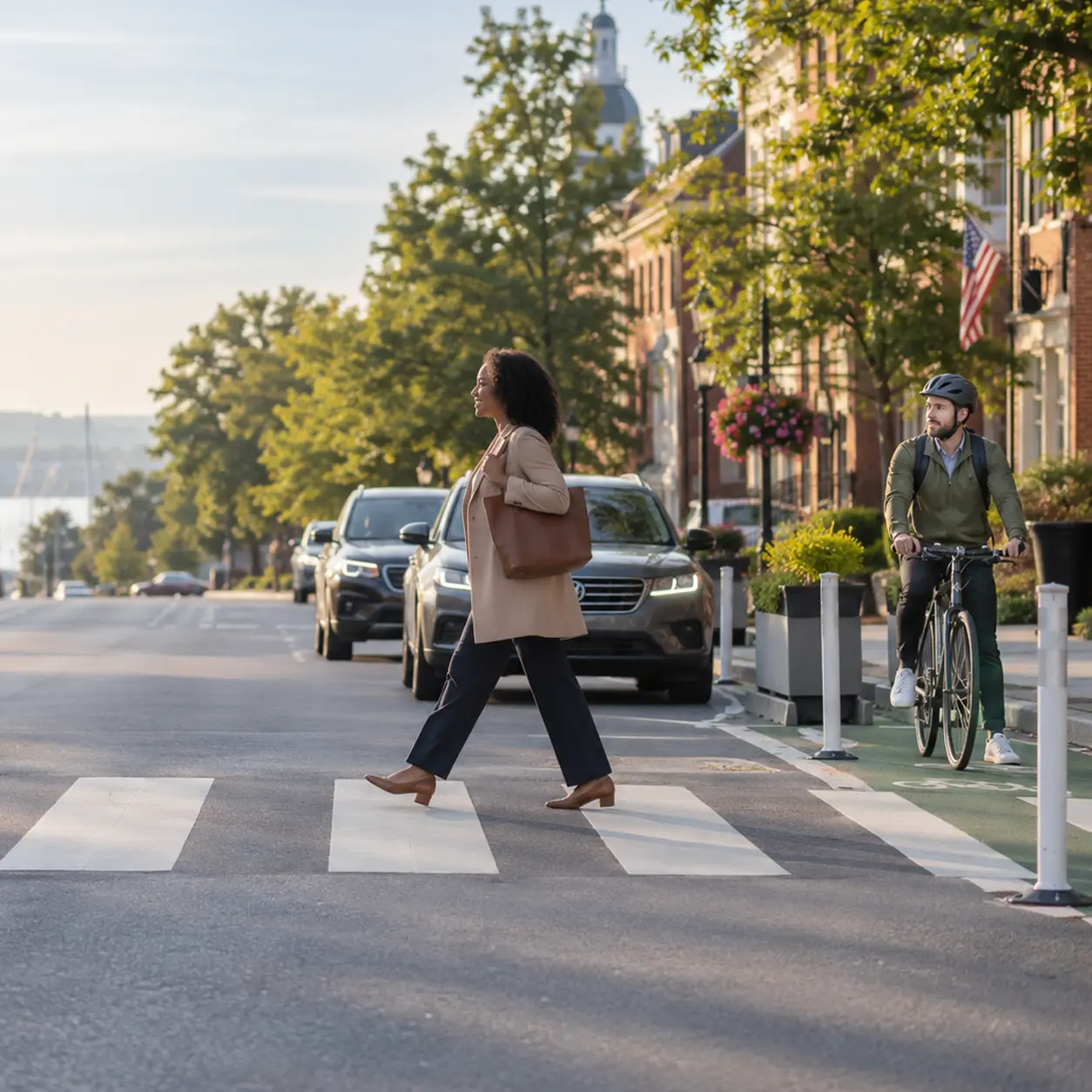
A Vulnerable Road User Claim Requires Careful Evidence
Types of Pedestrian and Bicycle Accident Claims

Crosswalk and Intersection Collisions
A driver may fail to stop or yield while proceeding through an intersection, turning across a crosswalk, or passing a vehicle already stopped for a person crossing. Traffic signals, crosswalk markings, sight lines, and the person’s location can all matter.Turning-Vehicle Crashes
Drivers making right or left turns may focus on other vehicles and overlook a pedestrian or cyclist traveling through the intersection. These cases often require a close review of signals, timing, visibility, and the path of each road user.Unsafe Passing and Sideswipe Crashes
A driver who passes a bicycle too closely can strike the rider or force the bicycle off the road. Maryland’s safe-passing rule generally requires at least three feet of clearance, subject to statutory conditions and exceptions that must be evaluated case by case.Bike-Lane, Shoulder, and Merge Collisions
A driver entering, crossing, parking in, or turning through a bicycle lane or shoulder may fail to yield to a lawful rider. Door openings, delivery activity, driveway movements, and merging traffic may also create danger.Dooring and Parked-Vehicle Incidents
A vehicle occupant who opens a door into a cyclist’s path can cause a direct impact or force the rider into moving traffic. Nearby surveillance, vehicle position, damage, and witness accounts may help establish what happened.Driveway, Parking Lot, and Backing Crashes
People walking or cycling can be struck when a driver exits a driveway, backs from a parking space, or moves through a lot without checking the surrounding area. Property video and vehicle-camera data may be especially useful.Hit-and-Run and Uninsured Driver Crashes
When the driver leaves or lacks sufficient insurance, the investigation may need to focus on identifying the vehicle, preserving video, locating witnesses, and reviewing any insurance coverage available to the injured person or household.Road Hazards, Work Zones, and Defective Equipment
Poorly maintained surfaces, debris, missing warnings, unsafe work-zone layouts, defective bicycle components, or negligent repairs may contribute to a crash. These claims depend on who created or controlled the hazard and what evidence can be preserved.If your accident does not fit one of these descriptions, you may still have a claim. A case review can help identify the legal and insurance issues involved.
Need Help With a Legal Matter?
You do not have to figure out your next steps alone. Tell Lauren about your situation and learn how the firm may be able to help.
What to Do After Being Struck by a Vehicle
Call 911 and remain in a safe location — Request emergency medical help and law enforcement. Avoid unnecessary movement when a head, neck, back, or other serious injury may be present, and follow the instructions of first responders.
If you are facing an urgent medical or safety emergency, call 911 or seek immediate professional assistance.
Fault and Liability
Who May Be Responsible for a Pedestrian or Bicycle Crash?
Responsibility is not determined solely by who was inside a vehicle, who was outside it, or whether a crosswalk or bicycle lane was painted on the road. The legal analysis may depend on traffic controls, location, movement, visibility, speed, road design, and the conduct of every person involved.
- A negligent driver — when distraction, speeding, impairment, failure to stop or yield, unsafe passing, an improper turn, backing, or another driving error caused the collision.
- A vehicle owner or employer — when the driver was using someone else’s vehicle or acting within work responsibilities and Maryland law supports an additional claim.
- A commercial, delivery, or rideshare company — when the crash occurred during work or a platform-connected trip and the company’s relationship, policies, or insurance may be relevant.
- Another driver or road user — when several vehicles or people contributed to the sequence of events.
- A property owner or business — when a driveway, parking area, sight obstruction, maintenance issue, or other property condition may have contributed and a legal duty existed.
- A road contractor or utility company — when construction, debris, equipment, missing warnings, or an unsafe temporary traffic pattern contributed to the crash.
- A state or local government entity — when roadway design, maintenance, traffic controls, or a government vehicle may be involved. Notice requirements and immunities can make prompt legal review especially important.
- A bicycle or parts manufacturer or repair provider — when defective equipment or negligent service may have caused a rider to lose control or worsened the injuries.
The goal is to identify the people and organizations supported by the evidence—not to name every possible party. Each claim requires a separate review of legal duties, insurance, and causation.
Reconstructing the Collision
Evidence in Pedestrian and Bicycle Accident Claims
A crash report is an important starting point, but it may not capture everything. Independent evidence can help establish whether the driver was turning, speeding, distracted, backing, passing, or failing to yield—and whether the injured person was lawfully using the roadway, crosswalk, sidewalk, shoulder, or bicycle lane.
- Scene evidence — police reports, photographs, measurements, debris, skid or scrape marks, bicycle and vehicle positions, crosswalks, lane markings, signs, signals, lighting, and weather.
- Video and photographs — business or residential surveillance, doorbell cameras, vehicle dashcams, transit or traffic-camera material where available, and images captured by witnesses or first responders.
- Witness accounts — statements from drivers, passengers, nearby residents or businesses, other pedestrians or cyclists, and people who observed events before or during the collision.
- Vehicle and electronic evidence — damage patterns, event data when available, phone or navigation information obtained through proper legal process, and inspection of the involved vehicle.
- Bicycle and equipment evidence — the preserved bicycle, helmet, lights, reflectors, wheels, brakes, wearable devices, bags, clothing, and damaged components when visibility, movement, or mechanical failure is disputed.
- Roadway and visibility evidence — sight-distance measurements, signal timing, sun position, parked vehicles, landscaping, construction plans, surface defects, and the driver’s claimed line of sight.
- Medical evidence — emergency records, diagnostic imaging, specialist evaluations, surgery reports, therapy records, photographs, treatment recommendations, and documentation connecting symptoms to the crash.
- Financial and life-impact evidence — wage records, employment information, receipts, household assistance, missed school or activities, mobility limitations, symptom notes, and evidence of future care or work restrictions.
Surveillance can be overwritten, roadway conditions can change, and damaged bicycles or vehicles may be repaired or destroyed. Prompt preservation can make a meaningful difference.
Looking Beyond the Initial Medical Bill
Insurance Claims and Recoverable Losses
The driver’s liability insurer may question where the pedestrian or cyclist was traveling, what clothing or equipment was visible, whether traffic controls were followed, or whether the injuries are related to the collision. Those issues should be evaluated through evidence rather than assumptions.
Depending on the circumstances, possible coverage may include the driver’s liability policy, a commercial or employer policy, rideshare coverage, the injured person’s own or household automobile coverage, uninsured or underinsured motorist protection, health insurance, and other policy benefits. Coverage for a pedestrian or cyclist is highly fact-specific, so the full policy and household relationships should be reviewed rather than relying only on an insurance card or declarations page.
Depending on the evidence and Maryland law, a pedestrian or bicycle injury claim may seek compensation for losses such as:
- Emergency transportation, hospitalization, surgery, physician visits, medication, therapy, and other reasonable medical expenses
- Future treatment, rehabilitation, mobility equipment, home modifications, or long-term care supported by medical evidence
- Lost wages and other income missed during recovery
- Reduced ability to work or earn income in the future
- Physical pain, emotional suffering, inconvenience, scarring, and loss of enjoyment of life
- Damage to a bicycle, helmet, phone, clothing, or other personal property
- Reasonable transportation, household-help, and other out-of-pocket expenses connected to recovery
- Wrongful-death and estate-related losses when a collision causes a fatality, subject to the people, damages, and procedures Maryland law permits
No responsible lawyer can value a case from the collision type alone. The outcome depends on proof of fault, applicable insurance, injury severity, treatment, recovery, income loss, future needs, and the strength of the supporting evidence.
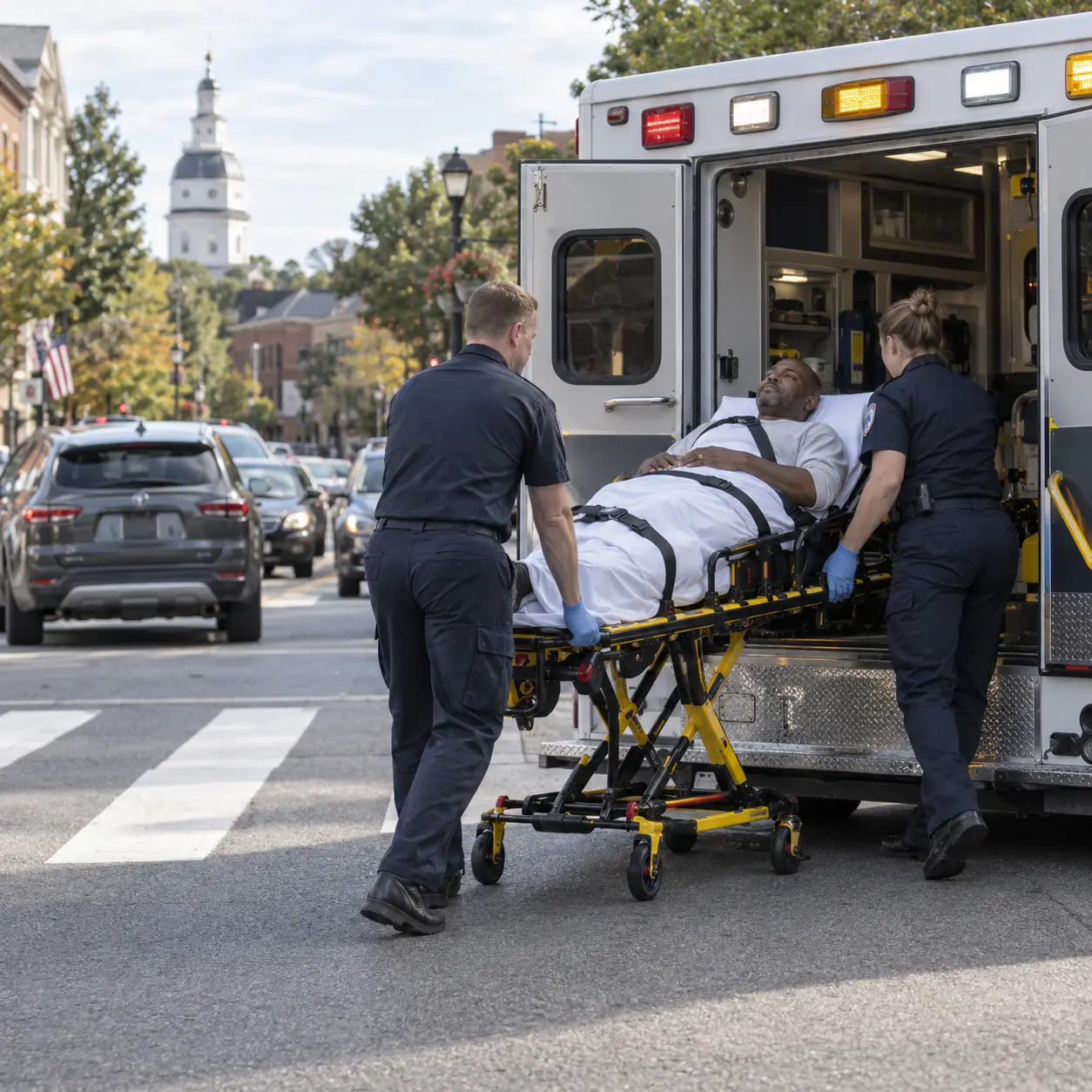
A Clear Path Forward
How a Maryland Pedestrian or Bicycle Accident Claim Moves Forward
Lauren listens to what happened, reviews the available information, discusses immediate concerns, and determines whether the firm can assist.
The firm can identify video, physical items, roadway conditions, devices, and other evidence that should be documented or kept unchanged, then send appropriate preservation requests.
Crash evidence, witness accounts, traffic controls, vehicle movements, visibility, crosswalk or bicycle-lane conditions, and relevant Maryland rules are reviewed together.
The driver, vehicle owner, employer, commercial or rideshare company, contractor, public entity, and available policies may be evaluated based on the facts.
Medical care, symptoms, work limitations, expenses, mobility changes, daily restrictions, scarring, and future needs are organized so the claim reflects more than the first emergency visit.
Lauren presents the supported claim, evaluates insurer responses, explains settlement options, and can discuss filing suit when a fair resolution is not offered.
Frequently Asked Questions About Maryland Pedestrian and Bicycle Claims
What if the driver left the scene or had no insurance?
Does a driver have to stop for someone in a crosswalk?
Do bicyclists have the same rights as drivers?
How much room must a driver leave when passing a bicycle?
What if the other driver or insurer says I caused the crash?
What if the insurer says the pedestrian or cyclist was partly at fault?
How long do I have to file a pedestrian or bicycle accident claim?
How much does it cost to speak with Lauren?
How Lauren Helps
Focused Legal Support After a Maryland Car Accident
A car accident claim requires attention to the crash evidence, medical documentation, insurance policies, lost income, and defenses raised by the opposing side. Lauren helps clients organize those moving parts and understand the decisions that arise throughout the case.
With more than 20 years working in the personal injury field, Lauren brings practical experience with injury claims and insurance negotiations. She provides direct guidance, explains the process in understandable terms, and prepares each matter according to its own facts and challenges.